

System Architecture
Overview of the TextLayer Core system architecture.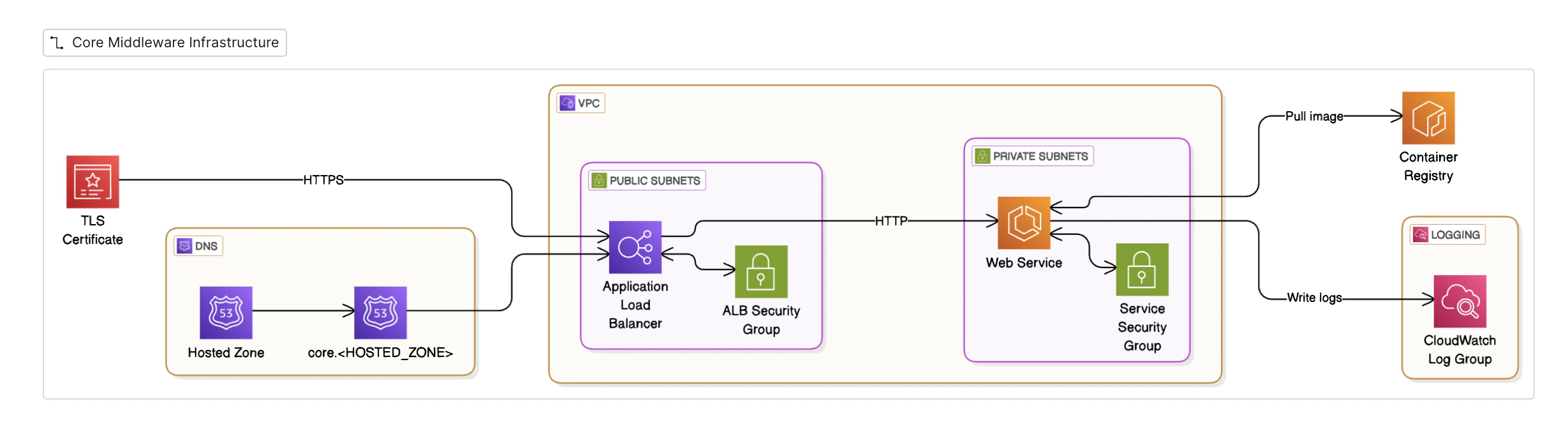
Core Middleware Infrastructure
The Core Middleware Infrastructure diagram illustrates the AWS-based deployment architecture for TextLayer Core.Key Components
TLS Certificate
- Provides secure HTTPS connections to the application
- Encrypts data in transit between clients and the application
- Managed through AWS Certificate Manager
DNS Configuration
- Hosted Zone: Manages DNS records for the domain
- Core Hosted Zone: Specific DNS configuration for the core middleware services
- Routes external traffic to the appropriate AWS services
Network Architecture
- VPC (Virtual Private Cloud): Isolated network environment for TextLayer Core resources
- Subnets:
- Public Subnets: Host internet-facing resources like the Application Load Balancer
- Private Subnets: Host protected resources like the Web Service, providing an additional security layer
Security Components
- ALB Security Group: Controls traffic to and from the Application Load Balancer
- Service Security Group: Governs access to the Web Service, allowing only necessary connections
Application Components
- Application Load Balancer: Distributes incoming traffic across multiple targets for improved availability
- Web Service: Core application service running in containers within the private subnet
- Container Registry: Stores and manages Docker container images used by the Web Service
Monitoring and Logging
- CloudWatch Log Group: Centralized logging solution for application and infrastructure logs
- Enables monitoring, alerting, and troubleshooting of the entire stack
Data Flow
- External requests reach the system through HTTPS, secured by TLS certificates
- DNS routes the traffic to the Application Load Balancer in the public subnet
- The ALB forwards requests to the Web Service running in the private subnet
- The Web Service pulls container images from the Container Registry when needed
- All components write logs to CloudWatch for monitoring and troubleshooting